By Julia Nowecki, Head of Violence Prevention Network Academy
In 2025, Violence Prevention Network successfully implemented a comprehensive capacity-building project in Aotearoa New Zealand, aimed at strengthening national efforts in preventing and countering violent extremism (P/CVE).
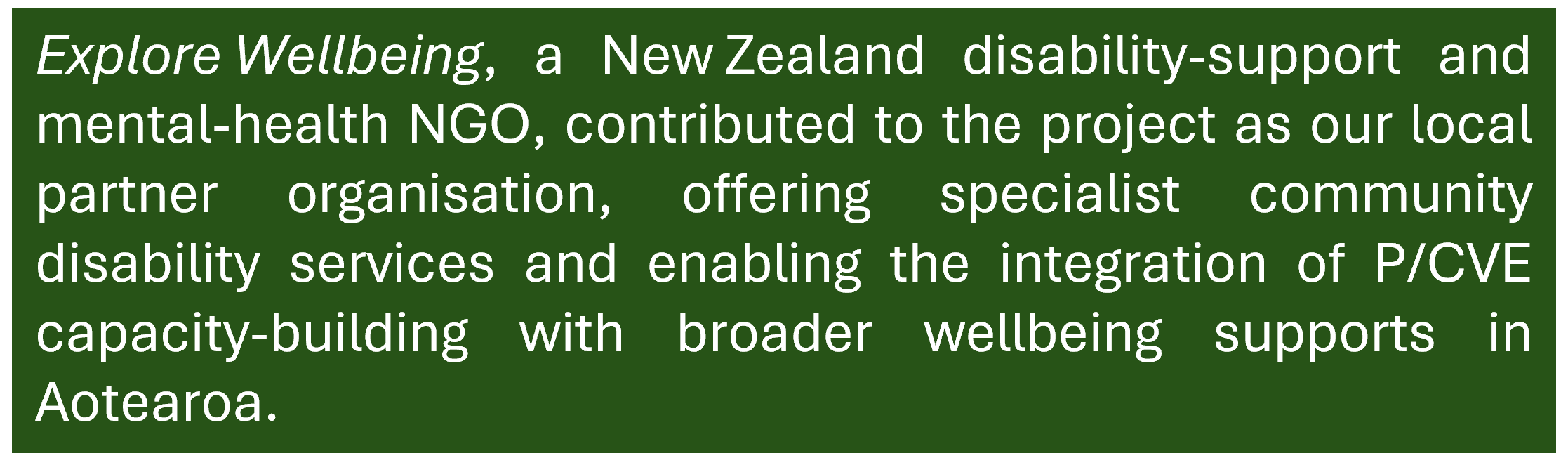
The project was carried out in close cooperation with local partner organisations Explore Hāpainga Ora and He Aranga Ake, and was supported by a range of governmental stakeholders, including representatives from police, corrections, education, health, child and youth services.
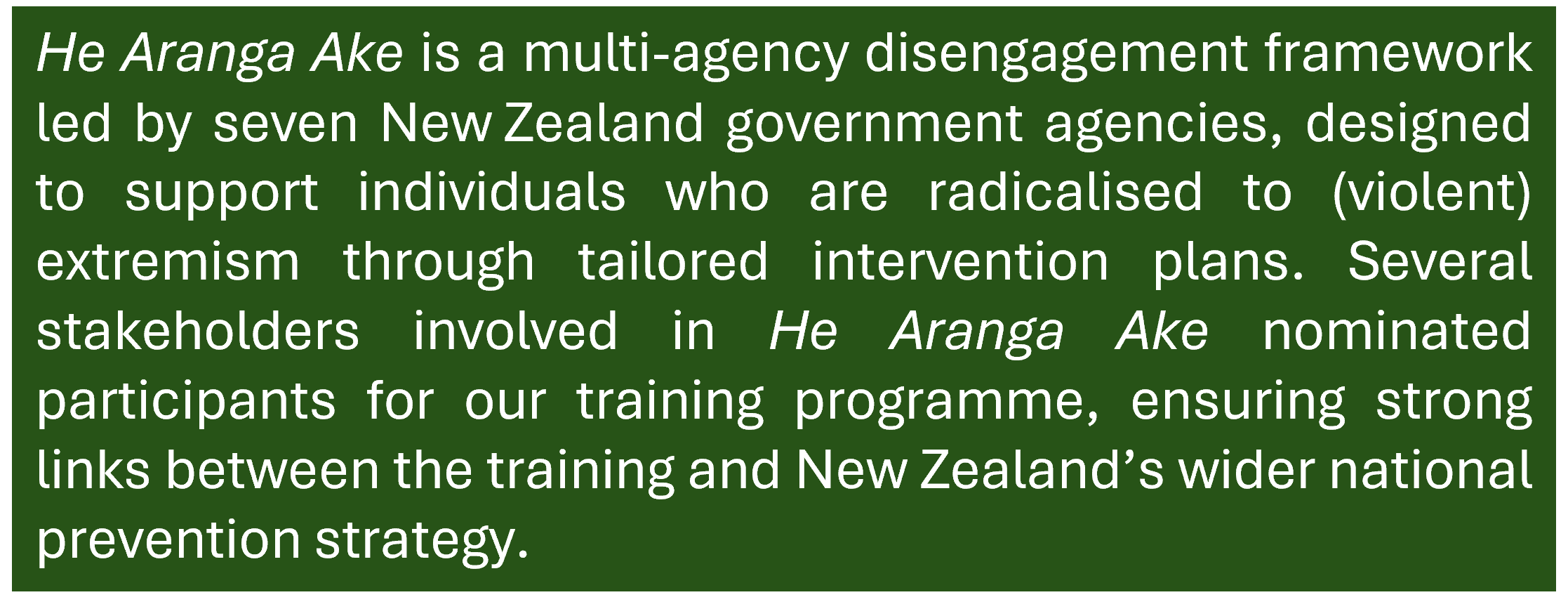
This initiative focused on developing a cohort of local professionals equipped to work with individuals at risk of radicalisation or engaged in extremist behaviour. At the same time, it supported the creation of a wider professional infrastructure and referral system, strengthening the collaborative response to P/CVE in New Zealand.
Train-the-Trainer Programme
At the heart of the project was a nine-month Train-the-Trainer programme for practitioners with backgrounds in psychology, social work, education, and law enforcement. The training equipped participants with the skills and knowledge necessary to carry out direct counselling work with radicalised individuals and, in the longer term, to train others in the field.
The programme began with two intensive in-person training modules, delivered in February and March 2025 by training specialists Julia Nowecki and Niv Zonis. Each training session spanned four days and covered key P/CVE concepts such as types of extremism, ideological narratives, push and pull factors for radicalisation to (violent) extremism, holistic case assessment, understanding risks and potential for a successful disengagement process. Participants were also introduced to the GRIDD PRO social diagnostics tool, which supports casework by offering a structured approach from assessment to support and intervention planning to impact measurement and evaluation.
Following the in-person component, participants continued their learning through a series of monthly online trainings, supervision sessions and e-learning modules from April to September. These sessions offered deeper insights into case work, biographical work methods, de-escalation strategies, and self-care techniques essential for working in high-stress environments.
The online supervision was moderated by experienced Violence Prevention Network practitioners, including Alexander Sievers (director of INDEX – International Network for Disengagement and Exit), who contributed his expertise from the prison context working with individuals radicalised to right-wing violent extremism, as well as Feride Aktas and Enver Tekinöz, senior VPN practitioners working with people radicalised to extremism justified by faith. These confidential peer consultations allowed practitioners to discuss challenging cases, share best practices, and build a strong Community of Practice within the emerging P/CVE field in New Zealand.
Supporting Multi-Agency Collaboration
Another key aim of the project was to foster improved cooperation between different authorities and organisations working in the field of violence prevention. To this end, Violence Prevention Network facilitated several expert exchange sessions, providing workshops and inputs for policymakers, law enforcement officials, researchers, educators, psychologists and health professionals. These events helped strengthen inter-agency understanding and laid the groundwork for a more coordinated national P/CVE approach.
Violence Prevention Network also supported the development of local referral structures by advising stakeholders on multi-agency collaboration in designing sustainable P/CVE structures, holistic case management processes, and awareness-raising measures. The ultimate goal: a sustainable framework that allows for early intervention and targeted support for individuals at risk.
E-Learning Modules for a Wider Audience
In addition to the practitioner training, Violence Prevention Network worked closely with Explore Wellbeing to develop a series of publicly available e-learning modules. These were designed to increase general awareness around radicalisation and extremism and to equip frontline workers across sectors with the knowledge and confidence to respond appropriately.
- Recognising signs of radicalisation and violent extremism
- Understanding the foundations of P/CVE
- Identifying early intervention strategies
- Practising self-care for non-specialist professionals
- Navigating and using local referral systems
These modules are intended for educators, youth workers, healthcare professionals, volunteers, and others in community-facing roles, supporting a whole-of-society approach to violence prevention.
Additionally, Violence Prevention Network created three online modules available for participants of the Train-the-Trainers programme. These modules, co-created by Violence Prevention Network training experts Felicitas Donata Humburg, Quirina Kiesel, Eyshan Shadi, together with frontline practitioners Julia Nowecki, Wenke Krestin and Luise Rauer, focus on the following topics:
- Biographical Method „Life Line“: A tool for holistic case assessment
- Biographical Method „Biography Bar“: A tool for holistic case assessment
- De-escalation and Self-Protection in Counselling Work: A case example
Conclusion
This project marked an important step in supporting the development of local P/CVE capacity in New Zealand. By combining practical training, online learning, and systemic development, the initiative has laid the foundation for a national Community of Practice and improved cooperation across sectors.
Violence Prevention Network is grateful for the collaboration with its dedicated partners and participants and looks forward to continued cooperation in future projects.
Get in Touch
Whether you are a professional seeking skills, a team in need of support, or an organisation aiming for systemic change – we’re here to help. Explore our offers, get inspired by our work, and contact us for a personalised consultation: info@vpn-academy.com
We look forward to hearing from you.
 INTERVENTIONEN