By Niklas Brinkmöller and Niklas von Reischach (Violence Prevention Network)
This article was first published in German in: Interventionen – Zeitschrift für Verantwortungspädagogik Nr. 20, 2026
Extremist actors continue to pose a serious threat on social media, though rarely by spreading entirely new ideologies or narratives. Instead, they present well-known narratives in a dynamic and digitally optimised form. This can be observed in the topics, rhetoric and presentations online. A particular challenge is the extremely rapid, emotionally charged reference to current global and local conflicts. In this context, frustrations, anger and fears are frequently exploited to mobilise support for their own anti-democratic positions. Furthermore, new and hybrid forms of extremism, innovative media formats, and the use of borderline content, algorithmic amplification and artificial intelligence present new problems. Extremist actors are highly adept at navigating existing regulatory and enforcement gaps as well as legal grey areas, whilst still maintaining and, in some cases, even expanding their presence. At the same time, they normalise and mainstream group-focused hostility and expand the breeding ground for a propensity towards and the perpetration of violence. Social media thus provides an environment that can promote and accelerate processes of radicalisation towards extremist worldviews on multiple levels. What is needed here are prevention and disengagement programmes that reach people where they consume anti-democratic or extremist online content and provide them with access to direct, personal counselling and support – both online and offline.
Assessing current developments requires, on the one hand, the identification of familiar narratives that continue to exert a powerful influence. On the other hand, it requires the results of careful and ongoing observation of current trends and the rhetoric of extremist actors, in order to subsequently identify dynamic changes and draw conclusions for policy and practice.[1] Accordingly, this article focuses primarily on the question of how extremist actors will disseminate their content and narratives in digital contexts in 2026.
Addictive digital media usage
To better understand the ways in which extremist content is disseminated and received on social media, we first need to take a brief look at current consumption patterns in Germany. A recent study by the University Medical Centre Hamburg-Eppendorf highlights problematic usage patterns among children and young people. The authors highlight that 10- to 17-year-olds in Germany use social media for an average of approximately 2.5 to 3.5 hours per day (Wiedemann, Thomasius and Paschke 2025, p. 12). Around 1.3 million of these 10-17-year-olds are at risk of developing serious problems with social interaction or their performance at school, work or in training as a result of their social media use. Just under 300,000 of them already exhibit pathological social media use (ibid., p. 13).[2] The authors therefore highlight the importance of expanding prevention and intervention measures in this area (ibid., p. 22).
In addition to heavy usage, the study also highlights just how prevalent extremist content is online. According to the 2025 ‘Youth, Information, Media’ (JIM) study, for example, more than half of 12- to 19-year-olds report having encountered extreme political views on the internet (Medienpädagogischer Forschungsverbund Südwest 2025, p. 72).[3] Furthermore, monitoring by Violence Prevention Network shows that extremist actors on TikTok, as well as elsewhere, regularly succeed in generating view counts in the six- or seven-figure range with their content.
On the largest social media platforms, content that explicitly glorifies violence, banned symbols, or content from terrorist attackers and groups can still be found. This is partly because content is often reproduced in an altered or coded form (Karo, Divon and Hallinan 2026).
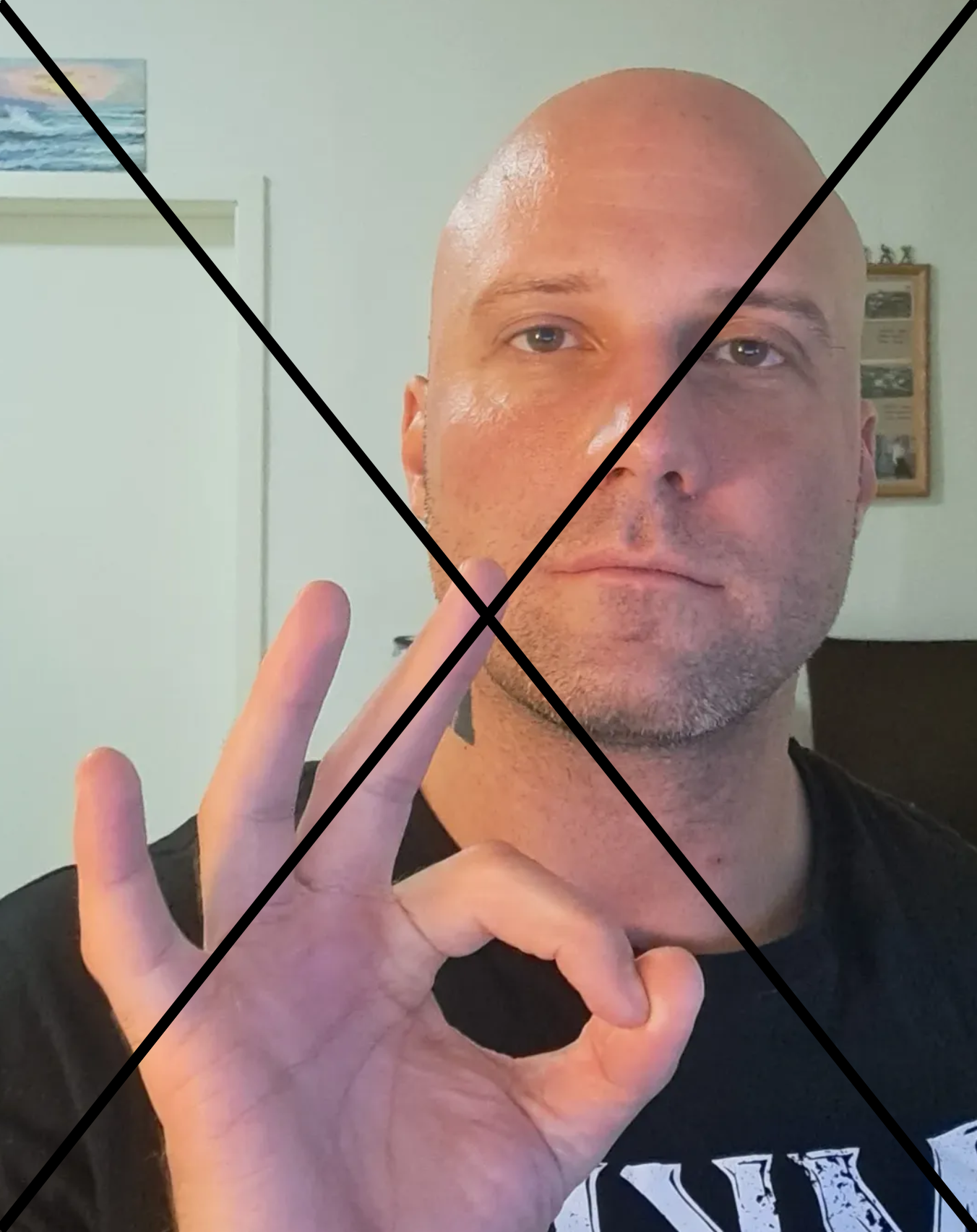
Even with future improvements to content moderation, it will not be possible to prevent coded content in particular from being disseminated on the platforms. This type of veiled communication continually adapts to new obstacles. However, alongside the mere presence or availability of this content, it is precisely the platform-inherent algorithmic amplification that poses a central problem (Kuzev 2025, n.p.; Whittaker et al. 2021, p. 12). Topics popular on platforms, as well as content with which individual users interact particularly strongly, are algorithmically amplified and displayed more frequently.
Despite the existence of content that explicitly glorifies violence or promotes terrorism on these platforms, the majority of content tends to fall into a grey area. Particularly within the far-right spectrum, coded content has long been disseminated in the form of supposedly humorous or satirical memes. Often, the content falls just below the threshold of criminal liability. Nevertheless, it is precisely this content that plays a central role in opening individuals up to (even more explicit or militant) extremist ideas.
Extremist narratives in digital spaces
Whether it be homophobia, anti-Semitism, racism or misogyny: certain elements of group-focused hostility can be found in almost all extremist ideologies. And so, the social media presence of various extremist phenomena also features familiar narratives of inequality and characteristic ideological fragments. Actors on the far right, for instance, continue to spread conspiracy myths about a ‘population replacement’, racist hostility towards people of migrant backgrounds, anti-liberal hostility towards the system, and revisionist historical positions. Fantasies of a homogeneous “national community” imagined as white are also propagated in posts, and warnings are issued about supposed cultural decline (dist[ex] monitor 2025, pp. 3–5).[4] At their core, these narratives are not new, innovative or specific to the digital sphere, but have been familiar for years or even decades.

The situation is similar in the realm of Islamist extremism. Here, too, actors continue to disseminate familiar narratives on social media. These include accounts that invoke an overarching community of all living Muslims, whilst simultaneously constructing a strict dichotomy and inequality between ‘believers’ and ‘unbelievers’. Similarly, there are narratives that delegitimise secular orders, or attempts to instrumentalise experiences of anti-Muslim racism to justify anti-democratic demands.
Adaptation to current crises and conflicts
Whilst the underlying narratives and logic of denigration in the content show a degree of continuity, dynamic patterns of adaptation can be observed in the choice of topics, references and specific language used. Many extremist actors base their themes on the current situation and link this to their familiar core narratives. Anti-democratic narratives are thus adapted to current events, for example, by means of bridging narratives. In recent years, for instance, the COVID-19 pandemic and Russia’s war of aggression against Ukraine have been used to exploit prevailing public sentiment for anti-democratic agendas.
One example from recent months is the polarising exploitation of the resurgent Middle East conflict triggered by the Hamas terrorist attack, Israel’s counter-attack, the subsequent military escalation and the accompanying humanitarian catastrophe in Gaza. Drawing on the scale of the destruction and the high number of civilian casualties, Islamist actors construct an argumentative bridge for the supposed necessity of a caliphate (in the Middle East) or interpret the conflict as alleged proof of a global war against all Muslims. In doing so, they tap into existing gaps in discourse, as well as feelings of concern, frustration and fear, in order to exploit them for their anti-democratic ends.
In the context of right-wing extremism, some actors, in turn, criticise the German government’s financial support for Ukraine in the wake of Russia’s war of aggression. They claim that the government is thereby neglecting the interests of its own population and misappropriating taxpayers’ money. In doing so, they stoke mistrust of democratic institutions and international alliances.
The revelations about the paedophile activities of Jeffrey Epstein and his network (the ‘Epstein Files’) are also being exploited across various phenomena to serve as supposed evidence for both old and new interpretations of anti-Semitic conspiracy myths concerning an alleged Jewish global conspiracy or ritual murder legends. Through this approach, well-known extremist ideologies and tropes are imbued with contemporary relevance and emotionalised in order to incite blanket hostility against “the system” or “the elites”.
Dynamic address and design
In the realm of narratives, it is primarily the day-to-day frames of reference that are adapted, whilst the underlying narratives themselves usually persist consistently. In contrast, the forms of addressing target audiences and audiovisual design are undergoing much more significant change. In times of short-lived social media trends, this ensures connectivity, particularly with young target groups. The formats used by extremist actors have become more diverse. Alongside traditional speeches, sermons and addresses, there is an increasing prevalence of in-depth podcasts or panel discussions, event-style livestreams and elaborate productions of actions and street demonstrations. Often, particularly controversial, gripping or emotional elements are edited out of long livestreams and posted as short videos on TikTok, Instagram and similar platforms. This allows the content to generate additional reach and spread beyond the original creator and context.[5] Longer formats such as podcasts or panel discussions offer extremist actors the opportunity to present their detailed interpretations of social or political issues – usually unchallenged. Furthermore, parasocial relationships[6] are deliberately established between viewers and actors, as, in addition to substantive arguments, the subjectively perceived trust can have a particularly strong impact on radicalisation processes. The professional staging of offline actions makes it possible to project a sense of cohesion and strength. Furthermore, anti-democratic resistance is portrayed in a positive light and as enjoying broad support and approval, so that it appears more attractive to outsiders.
Staged approachability
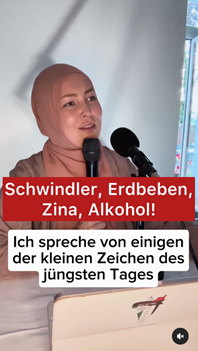
This diversity in presentation is also evident in the self-portrayal of extremist individuals and groups. In Islamist circles, alongside the familiar role of the Salafist preacher—whose message and manner are designed to project religious authority—there is also a growing trend towards acting as influencers. Well-known examples of this are Abdelhamid and Hanna Hansen, who embody a blend of Salafist authority and an approachable social media persona (dist[ex] monitor 2026, p. 6ff.). On TikTok and Instagram in particular, both achieve a wide reach without possessing particularly in-depth theological expertise. Hansen, as a female figure with a wide reach who shows her face on camera, also represents an exception in an otherwise heavily male-dominated scene and thus primarily addresses (young) women.
Action-oriented approach and real-world community
Changes can also be observed among action-oriented groups that place greater emphasis on campaigns and high-profile actions such as petitions or demonstrations. Following the ban on “Muslim Interaktiv” by the Federal Ministry of the Interior in 2025, the Hizb ut-Tahrir-affiliated channels “Generation Islam” and “Realität Islam” were deliberately restructured into personality-centred accounts, which are now known under the names of the respective figures: Suhaib R. Hoffmann, Bilal Oromo and Ahmad Tamim. This personalisation makes their posts appear to be the opinions of individuals, which may also serve to conceal and deny links to organisations that could be banned or already are (Möller 2025).
The spectrum of groups and movements within the far-right scene includes a wide range of established far-right influencers such as “Eingollan” or Tim Kellner. Violent (youth) organisations such as “Elblandrevolte”, which is linked to the youth wing of the party “Die Heimat” (formerly the NPD), and groups such as “Deutsche Jugend Voran” also demonstrate their readiness for offline action on the internet. Furthermore, far-right (minor) parties such as the “Freie Sachsen”coordinate, organise and document various anti-democratic protests. Finally, in so-called Active Clubs, social (offline) activities such as martial arts take centre stage, showcasing physical strength and community to their digital followers (Mellea 2024). Overall, it is evident that far-right groups currently often adopt an action-oriented approach aimed not only at establishing contact online, but also at organising offline activities – and then exploiting these on social media for propaganda and recruitment purposes. It is not uncommon for the initial focus to be on joint hiking, training, attending demonstrations or other non-digital social activities, before the focus shifts more strongly towards ideological content as the interaction progresses.
Hybridisation
Alongside the differentiation of familiar areas of extremism, new, hybrid forms of extremism and misanthropy are also becoming increasingly widespread (Brinkmöller, Büchsenschütz and Kreisel 2025). On social media, extremist actors can be found exploiting social trends – such as the popular topics of nutrition and health – and combining them with conspiracy theories. For instance, influencers who ostensibly focus on nutrition, health, finance or coaching simultaneously espouse anti-democratic and, in some cases, misanthropic positions. Similarly, the discourse of influencers who criticise societal reflection on gender construction and instead propagate a supposedly ‘strong’ masculinity falls into this category.
These actors do not always exhibit a coherent extremist worldview and sometimes employ different narratives, yet they contribute to the widespread social normalisation of hatred and misanthropy, particularly in the areas of anti-LGBTQ+ sentiment, misogyny, anti-Semitism and racism. They also sometimes normalise and trivialise clearly extremist content and can thus play a pivotal role in the radicalisation processes of young target groups who are susceptible to such ideas.
One example of a relatively new phenomenon that has been receiving increasing attention in recent years is ‘Nihilistic Violent Extremism’ (NVE), or ‘nihilistic violence’. This is a multifaceted phenomenon that, as a working concept, encompasses various forms of violence- and action-oriented online communities, including paedophile networks. A common feature of NVE actors is their desire to cause suffering, violence and chaos without embedding this within a clear ideological framework or necessarily working towards unambiguous political goals. However, this digital ecosystem borrows aesthetic and thematic references from extremist movements, particularly occult-based right-wing extremism, and in some cases also exhibits personnel overlaps. At the same time, the focus is mostly on the exercise of violence and power, for which other forms of extremism, such as jihadism, are occasionally used tactically. In Germany, the phenomenon has become known to a wider public primarily since 2025 through the so-called “White Tiger” case in Hamburg, although public attention in this context has largely centred on the paedophile elements as well as the incitement to self-harm and suicide.
Conclusion
All of this highlights just how challenging extremist communication strategies on social media are and will continue to be. Specific topics, the way messages are framed, and the technical implementation of extremist communication are dynamic and change rapidly. However, there is a sense of continuity in the underlying extremist narratives, as well as in the key biographical, emotional and psychosocial factors involved in radicalisation processes.
An increasingly relevant challenge for the prevention of extremism in the future will be to respond to new technical developments in a timely and effective manner. Images created using artificial intelligence enable extremist actors to visualise their content quickly, cost-effectively and professionally. AI makes it easier for these actors to visually represent abstract and sweeping mental images, such as alleged welfare fraud by migrants or a murderous war against all Muslims. This captures users’ attention. Furthermore, this makes extremist narratives more vivid, dynamic and compelling. AI can thus be used to establish desired fictions as realities, for instance in the context of disinformation (Ayyadi 2024).
The (communicative) offerings of extremist actors are presented through a combination of authoritarian rhetoric and prescriptive guidelines on how to live one’s life, an empathetic engagement with frustrations and real-life experiences, low-threshold opportunities for contact, and experiential activities. In this way, the extremist offering is differentiated and can appeal to various target groups, needs and interests. At their core, the various forms of appeal used by many extremist actors specifically target frustrations, experiences of crisis, perceptions of threat, and desires for security, meaning and recognition, in order to persuade and mobilise. In doing so, extremist actors target people’s fundamental psychosocial needs, which can have a powerful motivational effect. It is therefore both challenging and crucial to reach, as directly as possible, those individuals who find themselves in crisis situations or who, for other reasons, are susceptible to extremist messaging. The decades of social work-oriented expertise and the practical knowledge of organisations engaged in prevention and disengagement work provide a particularly valuable foundation for dealing with these factors and processes.
An effective counter-strategy to the mobilisation tactics of extremist actors must overcome the artificial divide between analogue and digital dimensions and spheres of life, whilst at the same time taking into account the associated interactions and needs. Given the convergence of digital and non-digital realities of life, there is therefore a need for initiatives that reach people where the content is consumed (online) and enable or facilitate their access to established support structures (both online and offline) and assistance services. Only in this way can we comprehensively counter the risk that people may turn to familiar extremist beliefs and groups through new forms of engagement.
Authors:
Niklas Brinkmöller is Monitoring Coordinator and a Research Associate at Violence Prevention Network. He studied political science, psychology, and peace and conflict studies. His work focuses on monitoring and analysing social media content and trends, as well as the communication strategies of extremist actors.
Niklas von Reischach has been working in the Digital Department at Violence Prevention Network since July 2024. He completed his PhD at Goethe University Frankfurt am Main. His doctoral thesis, Disinformation as Journalistic Glitches, was published by transcript Verlag in 2026.
Bibliography
Ayyadi, Kira. 2024. “AfD commissions far-right extremists with AI election campaign”. Belltower.News. Accessed 16 March 2026. https://www.belltower.news/tannwald-media-afd-beauftragt-rechtsextremen-mit-ki-wahlkampf-157509/
Brinkmöller, Niklas, Benedikt Büchsenschütz and Luis Kreisel. 2025. “Hybridisation, Fragmentation, Individualisation – Extremist Ideologies in Flux? Insights from Expert Interviews with Advisors on Prevention and Distancing Work and the Analysis of Social Media Networks.” Violence Prevention Network Series, Issue 15. Accessed 16 March 2026. https://violence-prevention-network.de/wp-content/uploads/2025/11/Violence-Prevention-Network-Schriftenreihe-Heft-15.pdf
dist[ex] monitor. 2025. “Report: 4th Quarter 2025”. dist-ex.de. Accessed 16 March 2026. https://www.dist-ex.de/publikationen/detail/distex-monitor-bericht-4-quartal-2025
dist[ex] monitor. 2026. “Report: 1st Quarter 2026”. dist-ex.de. Accessed 19 March 2026. https://www.dist-ex.de/publikationen/detail/distex-monitor-bericht-1-quartal-2026
Karo, Gilad, Tom Divon and Blake Hallinan. 2026. “The TikTok Caliphate: How Jihadist Supporters Exploit
Algorithmic Recommendations and Evade Content Moderation”. Social Media + Society, 12(1). Accessed 19 March 2026. https://journals.sagepub.com/doi/epub/10.1177/20563051251412167
Kuzev, Pencho. 2025. “Unchecked algorithmic power – The threat to democracy is real”. Konrad Adenauer Foundation. Accessed 18 March 2026. https://www.kas.de/de/web/die-politische-meinung/artikel/detail/-/content/unkontrollierte-algorithmische-macht
Media Education Research Network South-West (mpfs). 2025. “JIM Study 2025 – Youth, Information, Media”. mpfs.de. Accessed 16 March 2026. https://mpfs.de/app/uploads/2025/11/JIM_2025_PDF_barrierearm.pdf
Mellea, Jessa. 2024. “Comradeship, Fitness and Fascism: Active Clubs in Germany”. cemas.io. Accessed 16 March 2026. https://cemas.io/blog/active-clubs-in-deutschland/
Möller, Patrick. 2025. “The End of Generation Islam and Reality Islam – Old Wine in New Bottles”. Federal Working Group on Religiously Motivated Extremism. Accessed 19 March 2026. https://www.bag-relex.de/das-ende-von-generation-islam-und-realitaet-islam/
Whittaker, Joe, Sean Looney, Alastair Reed, and Fabio Votta. 2021. “Recommender systems and the amplification of extremist content.” Internet Policy Review, 10(2). Accessed 19 March 2026. https://doi.org/10.14763/2021.2.1565
Wiedemann, Hanna, Rainer Thomasius and Kerstin Paschke. 2025. “Problematic media use among children and young people in Germany: Results report 2024/2025. Selected findings from the seventh survey wave in September/October 2024.” dak.de/mediensucht. Accessed 16 March 2026. https://caas.content.dak.de/caas/v1/media/91492/data/7e8e26f78f4c5d590a9060daaceb15c3/20250312-dzskj-pk-bericht-final.pdf
List of Figures
Figure 1: Screenshot of an Instagram post from the account “mkd_nds” dated 21 July 2025. Accessed on 4 September 2025. (Account and post no longer available)
Figure 2: Screenshot of an Instagram post from the account “wilhelm_kachel” dated 6 February 2026. TBN: In the German text of the picture there is also a hidden pun that mocks the prophet and the fact that Muslims don’t eat pork. Accessed on 19 March 2026. https://www.instagram.com/p/DUaiVIRDf42/ Figure 3: Screenshot of an Instagram post from the account “hannahansenofficial” dated 9 October 2024. Accessed on 19 March 2026. https://www.instagram.com/p/DA6QC-TqWxP/
Figure 3: Screenshot of an Instagram post from the account “hannahansenofficial” dated 9 October 2024. Accessed on 19 March 2026. https://www.instagram.com/p/DA6QC-TqWxP/
[1] You can find up-to-date information on trends, key players and challenges relating to Islamist extremism, right-wing extremism, conspiracy theories and similar phenomena on dist[ex], for example: the dist[ex] monitor Telegram channel regularly publishes the latest articles. In addition, a quarterly monitoring report is published at https://www.dist-ex.de/en/publications.
[2] Problematic or pathological usage behaviour relates, for example, to social interactions or performance at school, work or in training.
[3] At the same time, it is important to note here that many people are exposed to extremist content without adopting its positions. A simplistic assumption that attitudes and behaviour change merely through exposure to such content is therefore not plausible. A more detailed examination of narratives, themes, appeals and individual needs is consequently required.
[4] This picture is partly contradicted: Black people and people of colour appear on social media, for example, as supporters of the AfD. This flexible and high-profile expansion of the concept of ‘being German’ challenges the aforementioned notion of a homogeneous and white Germany. It proves useful for reaching new voter groups and is therefore presumably used strategically.
[5] Una Titz and Julia Uebelacker describe how radical ideologies spread via clips and clip farming for the Amadeu Antonio Foundation (17 March 2026) at: https://www.belltower.news/clavicular-wie-clip-farms-radikale-ideologie-viral-machen-164957/ (last accessed: 18 March 2026).
[6] Parasocial relationships refer to one-sided social relationships in which, for example, viewers are under the illusion that they have a friendly relationship with influencers or know them better, even though the influencers do not know them. See, for example, Zoe Olbermann and Philine Janus for the Federal Agency for Civic Education (5 April 2024): https://www.bpb.de/lernen/digitale-bildung/werkstatt/546934/parasoziale-beziehungen-wenn-freundschaft-zur-illusion-wird/ (last accessed: 19 March 2026).

